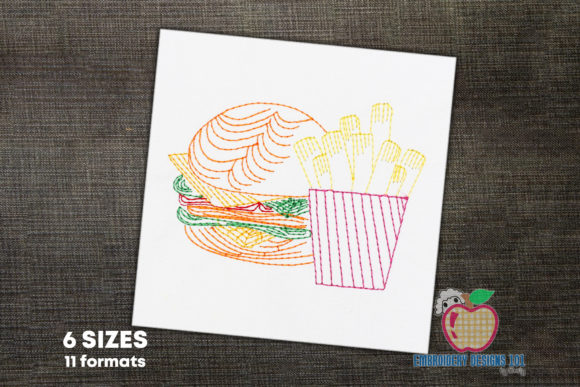
Delicious Burger and French Fries Embroidery Review
As an embroidery designer who has spent years digitizing and stitching for small businesses, I approach every new machine embroidery design with a critical eye. It is not just about whether the art looks cute on a screen; it is about how that digital embroidery file translates into a tangible asset for a brand. Today, I am reviewing the Delicious Burger and French Fries design, a line art piece marketed as fun and easy to stitch. For boutique owners, café operators, and Etsy sellers looking to expand their small business merch, this review breaks down the potential of this food-themed graphic in a commercial setting.
First Impressions: A Playful yet Professional Aesthetic
Upon loading the Delicious Burger and French Fries into my editing software, the immediate impression is one of approachability. The description highlights that this is a "running line stitch" design, which typically suggests a minimalist, single-line or continuous-line aesthetic. In the current market, this style bridges the gap between rustic handmade charm and modern minimalism. It feels friendly and bold without being overly aggressive or cluttered.
For a food-related business, such as a gourmet burger joint, a food truck, or a specialty bakery, this vibe is crucial. It avoids the stiff, corporate look of traditional logos and instead offers a handmade product feel that resonates with today's consumers who value authenticity. The line art style suggests movement and fluidity, making it an excellent candidate for brands that want to appear creative and accessible rather than rigid.
Real-World Application for Branded Merchandise
The true test of any embroidery file is its versatility across different substrates. Based on the "multiple sizes" mentioned in the product details, here is how I envision the Delicious Burger and French Fries performing in real business scenarios:
- Embroidered Patches: This is likely the strongest use case. A running line design works exceptionally well on twill or canvas patches. It can serve as a chest logo accent on denim jackets or a sleeve detail on work shirts. For a café, these patches could be sold as standalone collectibles or sewn onto aprons.
- Staff Uniforms and Aprons: Apron embroidery requires designs that are durable yet distinct. The simplicity of this line art means it won't create a heavy, stiff spot on the fabric, which is vital for staff who wear these garments for long shifts. It adds a touch of personality to standard black or brown uniforms.
- Cap Embroidery: Food trucks and casual dining spots often utilize branded caps. The curved surface of a cap front can be tricky, but a clean line design usually stitches out cleanly here, provided the digitizing accounts for the curve.
- Tote Bag Design: For retail shops selling goods alongside food, a canvas tote featuring this design acts as a walking advertisement. The "fun and easy" nature of the stitch pattern ensures quick production times for bulk orders.
- Customer Gifts and Event Merch: Whether for a grand opening or a loyalty reward, this design fits perfectly on napkins, pocket squares, or even packaging accents like fabric tags.
Technical Considerations and Production Challenges
While the aesthetic is promising, professional execution requires attention to technical details. The description notes these are "running line stitches." In the world of commercial embroidery, running stitches are efficient but can be fragile if not managed correctly.
When using the Delicious Burger and French Fries design, you must consider the following:
- Fabric Texture and Stability: Running stitches sit on top of the fabric rather than sinking into it. On textured fabrics like pique polo shirts or rough canvas, the line might break up visually. It is essential to use a high-quality stabilizer to prevent puckering, especially since line art shows distortion easily.
- Stitch Density and Durability: If this design is intended for items that need frequent washing, such as staff uniforms, verify the stitch density. Pure running stitches can snag or wear down faster than satin or fill stitches. For high-wear areas, you might need to discuss underlay options with your digitizer or choose a heavier weight thread.
- Size Limitations: The product comes in multiple sizes, but be cautious with the smallest versions. Fine lines can disappear or merge when stitched below a certain threshold (usually under 1.5 inches). Always test the smallest size on your actual production fabric before committing to a large run.
- Thread Color Contrast: Line art relies entirely on contrast. On dark uniforms, ensure you are using a high-viscosity thread that stands out. Conversely, on light fabrics, a dark thread will provide the necessary definition. Test the design in black and white first to ensure the shape remains recognizable without color reliance.
Impact on Brand Identity and Customer Trust
Incorporating the Delicious Burger and French Fries design into your inventory does more than just decorate an item; it strengthens your brand identity. Consistency is key in building customer trust. When a customer sees the same playful, high-quality embroidered icon on your menu, your staff's apron, and the tote bag they purchased, it creates a cohesive visual language.
This consistency signals professionalism. It tells the customer that you care about the details, from the food you serve to the merchandise you offer. Furthermore, in the era of social media, visually appealing custom apparel and accessories encourage user-generated content. A well-stitched, trendy line-art burger patch is "Instagrammable," driving organic engagement and buyer recognition for your shop.
Designer Notes for Commercial Use
Before integrating this design asset into your production workflow, I recommend the following checklist to ensure a premium finished product:
- Verify Licensing: Confirm the commercial licensing terms explicitly. Ensure you have the right to use the file for resale items or branded merchandise for clients.
- Check File Formats: Ensure the download includes the specific format compatible with your machine (e.g., PES, DST, EXP). The prompt mentions multiple sizes, but verify if these are separate files or if the design is scalable without losing quality.
- Create a Printable Mockup: Before stitching a single thread, create a printable mockup to show your client or to visualize the placement on the garment. This helps in approving the scale and position.
- Hoop Size Confirmation: Check the maximum dimensions against your available hoop sizes. While the design is described as flexible, ensure your specific hoop setup can accommodate the largest size offered without re-hooping.
- Compare Alongside Other Assets: Place this design next to your existing logo or other graphics. Does the line weight match? Does the style clash or complement your current visual ecosystem?
In conclusion, the Delicious Burger and French Fries line art design holds significant promise for small businesses in the food and lifestyle sectors. Its simplicity offers speed and cost-efficiency, while its style taps into the popular demand for authentic, handmade aesthetics. However, success lies in the execution. By paying close attention to fabric choice, stabilizer use, and size limitations, embroidery professionals can transform this simple digital file into a powerful tool for brand storytelling and revenue generation.